ServicesWater Testing
Water Testing in Tempe Before Any Equipment Is Chosen
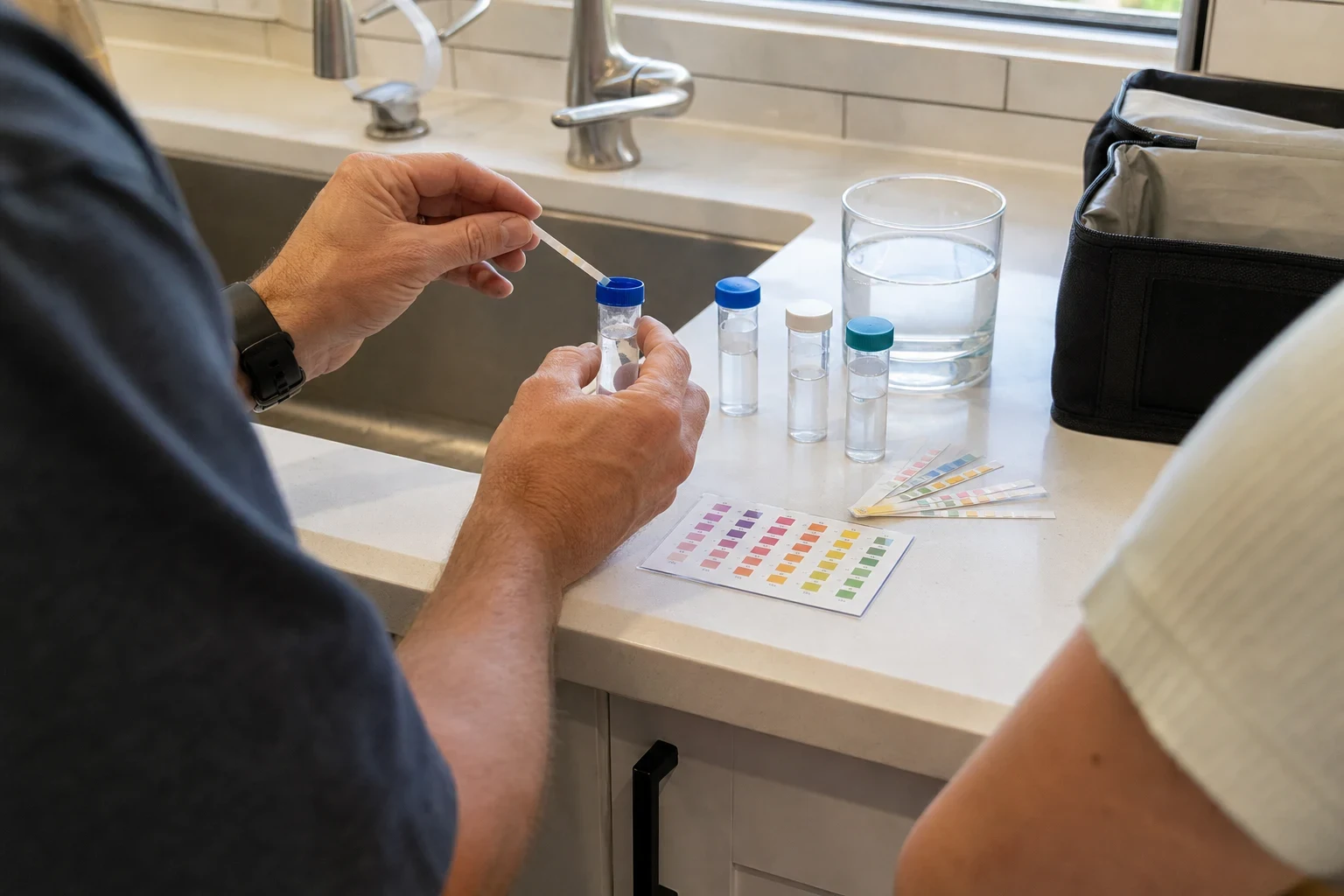
We stop by your home, run the tests at your kitchen sink and explain each number in plain language. The test is free with zero obligation. If the readings show you don't need a system, we'll say so and leave it there.
Why We Test Before We Talk About Systems
Most people call us because something is off. White crust on the faucets, spots on the glasses, a pool-like smell from the tap. A test tells us which of those comes from your water and how strong it is, so you are not guessing between a softener, a filter or a drinking water system.
The readings also shape the install itself. Hardness and flow decide the size of a softener, which decides the drain it needs and where the bypass valve goes. Chlorine levels point to the right carbon for whole-home filtration. We would rather plan an install that meets plumbing code from the first visit than fix a wrong-sized one later.
Our 3 five-star Google reviews come from neighbors who started exactly this way, with a test and a conversation at the kitchen counter.
What We Check During Your Free Test
Hardness in grains per gallon
Scale comes from calcium and magnesium. Measuring them shows whether a softener is worth having and, if so, what capacity your home calls for.
Total dissolved solids reading
A small meter reads the total amount of material carried in your water. That tells us whether a reverse osmosis faucet at the kitchen sink would make a taste difference you would notice.
Chlorine level and pH
We read how much disinfectant is in the water and where its balance sits. A heavy chlorine taste is among the top reasons homeowners ask about filtering the whole house.
Iron check for stains
Orange or brown marks in a sink or toilet bowl get an iron test, so we can tell you whether the stains come from the water itself or from your pipes.
A short plumbing walk-around
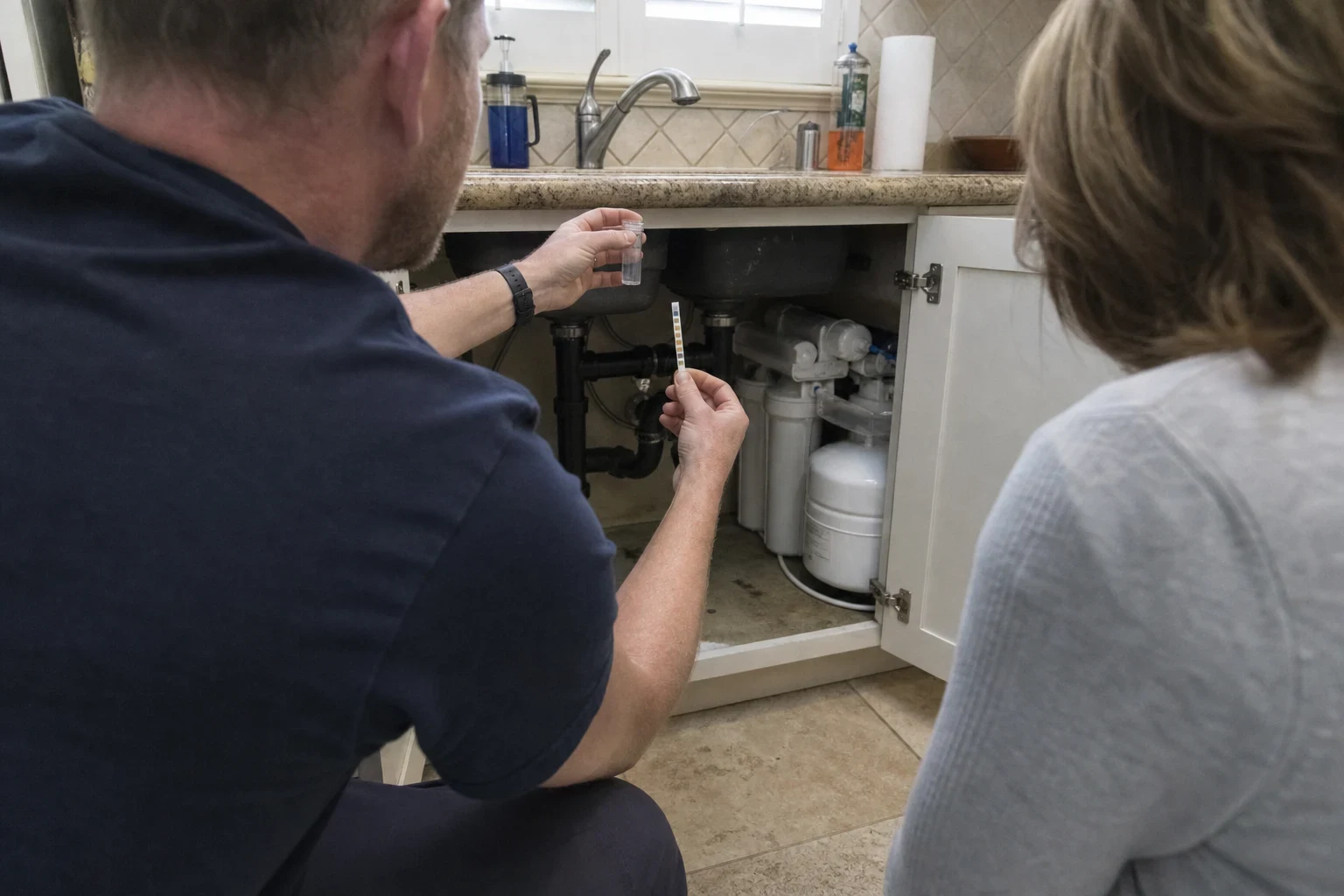
If you are fine with it, we find where the main line comes in, the closest drain and a power outlet. That gives an early picture of what an install to code would take at your house.
A plain walk through the numbers
We talk through every reading and how it shows up in your day-to-day routine. The results are yours to keep, buy or not.
Signs Your Home Is Due for a Water Test
- Crust on fixtures
- White or chalky buildup on showerheads, faucets and glass doors usually means hard water. A test tells you how hard, which matters for sizing.
- Spotty dishes and stiff laundry
- Minerals leave film on glasses and make towels feel rough. Soap also lathers poorly in hard water, so you end up using more of it.
- A chlorine smell or taste
- If tap water smells like a swimming pool, a chlorine reading shows whether carbon filtration would fix it.
- A water heater that pops or rumbles
- Scale settling in the tank can cause those sounds and cost you efficiency over time.
- You are about to buy a system
- Buying a softener or filter without numbers is a gamble. Testing first keeps you from paying for more equipment than your water calls for.
How the Test Visit Goes
- 1
Set a time by phone
Tell us what you have noticed and pick a time that suits you. There is nothing to prepare beyond clear access to the kitchen sink.
- 2
Samples at the tap
We run the cold water briefly, then take samples and run each test in front of you. Most of the readings are ready on the spot.
- 3
Readings, explained
We sit down with you and go through the results one by one. If something calls for a laboratory, such as a lead concern in older plumbing, we say so and explain how to arrange an outside lab test.
- 4
Your options, or none
If the water calls for a system, we explain which one and why, including any permit or code steps the install would involve. If it doesn't, we tell you that plainly and pack up.
What the Test Costs and What Moves System Pricing
The water test itself is free, with zero obligation. If you decide to go ahead with equipment, install is included with our water treatment systems, and we give you installed system pricing by phone or at the visit. These are the things that change that number.
- What the readings show
- Harder water or stronger chlorine means a larger softener or more carbon. Your results set the size, so the price follows the test.
- Daily demand in your home
- A family with several showers running at once in the morning pulls far more water than a couple living alone. That peak demand can call for a larger valve and tank.
- Where the system will go
- An install spot close to the main water line, a drain and a power outlet takes less work. A spot that needs new pipe runs or a longer drain line adds labor and parts.
- Code and permit requirements
- A softener or RO system needs a proper drain connection with an air gap and a bypass. If your setup needs extra work to meet code, or the job needs a permit, we explain it before you agree to anything.
Water Testing Questions
- Do I pay anything for the water test?
- No. There is no charge for the visit and no obligation attached to it. We leave you with your readings and what they mean, and what you do next is entirely your call.
- How long does the visit take?
- Plan on a short visit, usually well under an hour. The testing goes quickly; most of the time is spent talking through what the numbers mean for your home.
- If city water meets standards, why test at all?
- Meeting drinking water standards and being pleasant to live with are different things. Water can be safe and still be hard enough to scale your fixtures or carry a strong chlorine taste. Testing shows what you are actually dealing with at your own tap.
- Can you test for lead?
- Lead has to be measured by a laboratory, so we don't guess at it with a quick kit. If your home has older plumbing and you're concerned, we explain how to arrange a lab test and what a reverse osmosis system can do at the kitchen sink.
- What happens if I decide to buy a system?
- You get installed system pricing first, and the install is included. We plumb the system to code and handle a permit if the job needs one. Your equipment valves are covered by a 5-year warranty, and a separate 5-year warranty covers installation and labor.
Find Out What Is Really in Your Water
One phone call sets up your free test at home. You'll get real numbers, a plain explanation and an honest answer on whether you need anything at all.